 when your set up you can talk to anybody over ther world and be able to speak and see them.
Problems with video conferencing:
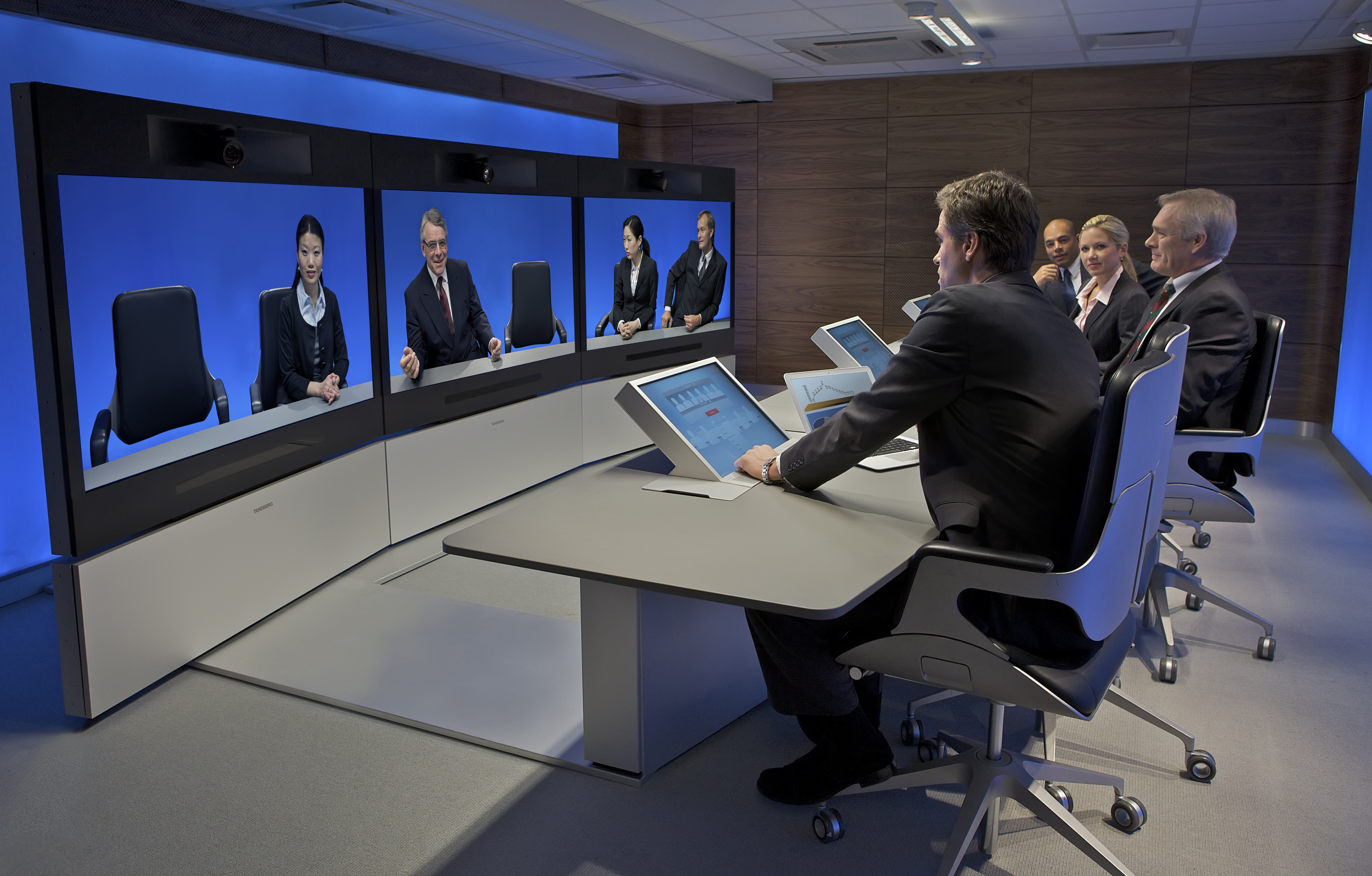
1. Eye Contact: It is known that eye contact plays a large role in conversational turn-taking, perceived attention and intent, and other aspects of group communication. While traditional telephone conversations give no eye contact cues, videoconferencing systems are arguably worse in that they provide an incorrect impression that the remote interlocutor is avoiding eye contact. Telepresence systems have cameras located in the screens that reduce the amount of, parallax observed by the users. This issue is also being addressed through research that generates a synthetic image with eye contact using stereo reconstruction.
Bell Communications Research owns a patent for eye-to-eye video conferencing using rear projection screens with a camera behind it. This technique eliminates the need for special cameras or image processing.
Bell Communications Research owns a patent for eye-to-eye video conferencing using rear projection screens with a camera behind it. This technique eliminates the need for special cameras or image processing.
2. Appearance Consciousness: A second problem with videoconferencing is being on camera, with the video stream possibly even being recorded. The burden of presenting an acceptable on-screen appearance is not present in audio-only communication. Early studies by Alphonse Chapanis found that the addition of video actually impaired communication, possibly because of the consciousness of being on camera.
3. Signal latency: The information transport of digital signals in many steps need time. In a telecommunicated conversation an increased latency, larger than about 150-300ms, becomes noticeable and soon unnatural and distracting. Therefore next to a stable large bandwidth, a small total round-trip time is another major technical requirement for the communication channel for interactive videoconferencing. (see ping time)
Videoconferencing can enable individuals in faraway places to have meetings on short notice. Time and money that used to be spent in travelling can be used to have short meetings. Technology such as VOIP can be used in conjunction with desktop videoconferencing to enable low-cost face-to-face business meetings without leaving the desk, especially for businesses with widespread offices. The technology is also used for telecommuting, in which employees work from home. One research report based on a sampling of 1,800 corporate employees showed that, as of June 2010, 54% of the respondents with access to video conferencing used it “all of the time” or “frequently”.
Impact on law:
Videoconferencing has allowed testimony to be used for individuals who are not able to attend the physical legal settings. In a military investigation in North Carolina, afghan witnesses have testified using videoconferencing. In Hall County, Georgia, LifeSize video conferencing systems are used for initial court appearances. The systems link the jail and the court room, reducing the expenses and major security risks of transporting prisoners to the courtroom

good description, but you didn't put how to set it up
ReplyDeletegood description but need more
ReplyDeleteits good but you have not said how to use video conferencing......=)
ReplyDeletetoo short >_<
ReplyDeleteGood but...
ReplyDeleteYou need abit more. =P
very good short and sweet :)
ReplyDeletethis is shit frankie is the best lol chelsea are shit as well :) lol
ReplyDeletespoooooooooooooooooon
ReplyDeleteI think you should write a column for the daily star :]
ReplyDeleteThis is so F*****G good man... I want to be like you :(
ReplyDeleteNice blog man, you just need to say how to use video conferencing. I like your info on viid conferencin anyways. Nice one geeza :)
ReplyDeleteThis comment has been removed by the author.
ReplyDelete